News › Protocol
Protocol
Blockstream researchers publish a security analysis of SHRINCS, a post-quantum scheme with signatures up to 90x larger
SHRINCS is a draft proposal, not a plan to change Bitcoin. Its hash-based design leans on SHA-256, but larger signatures could mean fewer transactions per block.

Blockstream Research director Jonas Nick, researcher Mikhail Kudinov and collaborators published a security analysis on Thursday of SHRINCS, a hash-based signature scheme that Decrypt calls an emerging frontrunner for post-quantum signatures in Bitcoin. Kudinov said they need "all the possible feedback" on a draft of the Bitcoin Improvement Proposal.
SHRINCS relies on SHA-256, already used by Bitcoin, to keep trust assumptions conservative. It combines two paths. One is a compact stateful signature built from one-time keys; the other is a larger stateless fallback. Blockstream's own write-up describes it as a stateless scheme combined with an unbalanced tree of one-time signatures, so a wallet restored from seed alone can still sign.
The main risk is operational. If a one-time key is reused by accident, an attacker could forge a signature for that address and steal funds. Nick said it "needs to be impossible" for users to trigger this, and that wallets must automatically enforce the stateless fallback whenever the state counter could be compromised.
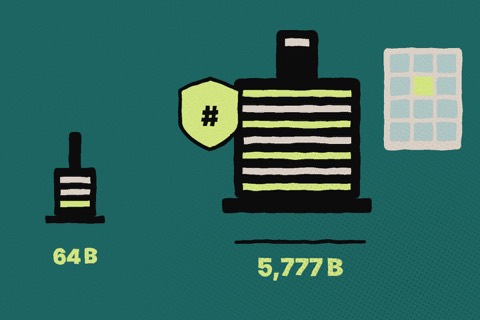
The cost is size. Decrypt gives stateful signatures as 548 to 4,619 bytes and stateless ones as 5,777 bytes, against 71 bytes for ECDSA and 64 for Taproot Schnorr. Blockstream's earlier post carries a 324-byte figure in its title, which probably reflects a different parameter set; we could not reconcile the numbers. Nick warned that large signatures change how many transactions fit in a block and the fee market. SHRINCS is still under review, and a separate proposal would be needed to add it to Bitcoin's rules.
Facts only, never financial advice.