News › Stablecoins
Stablecoins
The World Bank will test USDC with Citi and Circle to move development money, a dollar rail that is not bitcoin
Announced on 17 November: a pilot of regulated dollar stablecoins next to correspondent banking, building on FundsChain, which already tracks 350+ projects in 96 countries.
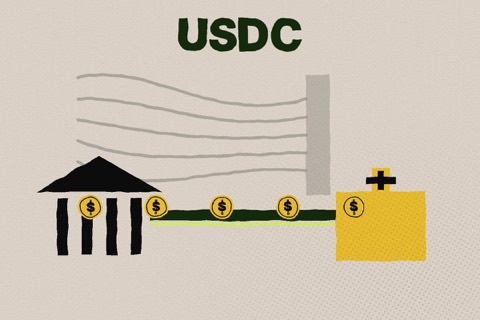

The World Bank Group said on Tuesday that it will explore Circle’s USDC stablecoin and blockchain payment rails to speed up and cut the cost of disbursing funds around the world, working with Citi and Circle. Decrypt describes the plan as a test of how regulated, dollar-denominated stablecoins could operate alongside or improve the current system, which runs on correspondent banking: the slow and costly network of intermediary banks that routes international payments.
The roles are split. Citi contributes its connections to established banking rails, and Circle provides the infrastructure to mint and settle funds in USDC. The Block reports that the effort builds on FundsChain, a World Bank blockchain platform designed to make disbursements more traceable, which already has more than 350 projects across 96 countries on its digital ledgers. The initial focus is an intermediated, interoperable model, limited to borrower countries where digital assets are permitted, with other banks to be involved over time.
Why does it matter? Scale. The Block notes that the World Bank Group, owned by 189 member countries, delivered $123.5 billion in loans, grants, equity investments and guarantees in the fiscal year that ended on 30 June 2026, including $35.8 billion in Sub-Saharan Africa and $25.1 billion in Latin America and the Caribbean. Even small efficiency gains on sums like that could free up meaningful resources.
The institutions frame it in practical terms. President Ajay Banga said the initiative is about making the financial plumbing of development work better, so that “a health clinic gets built on time, a farmer gets paid before the harvest season ends.” Circle chief executive Jeremy Allaire said development finance is one of the most important applications for the technology. Citi’s Shahmir Khaliq promised “24/7 capabilities at scale so that critical funds move in real time.”
It also fits a wider pattern. Decrypt notes that Goldman Sachs, Citi and other banks have committed roughly $270 million to a joint stablecoin venture, and that Deutsche Bank recently went live with crypto custody. For Circle, whose USDC is the second-largest stablecoin, a role in World Bank payment plumbing is a step toward mainstream legitimacy, even as the broader market endures ETF outflows and falling prices.
A note from the BitCorner desk: a stablecoin is a claim on a company that promises to hold dollars, not a bearer asset like bitcoin. It can be faster than a correspondent bank, but it still depends on an issuer, on regulators and on the countries that allow it. That is the difference worth keeping in mind when someone calls every blockchain payment “crypto.”
Facts only, never financial advice.