News › AI
AI
Microsoft bets on smaller, specialised models: MAI Code 2 claims 96% of a top Claude model’s coding score for 5% of the cost
At Ignite, Microsoft unveiled coding, cybersecurity and image models and claims large price advantages, but most of the benchmarks are its own and the cost figures use a 50% promotional discount.

Microsoft unveiled a new lineup of specialised AI models at its Ignite conference on Tuesday, a direct run at Anthropic and OpenAI in coding, cybersecurity and image generation. According to Decrypt, instead of building a single chatbot meant to beat everyone at everything, Microsoft is pitching models trained for particular jobs at substantially lower cost.
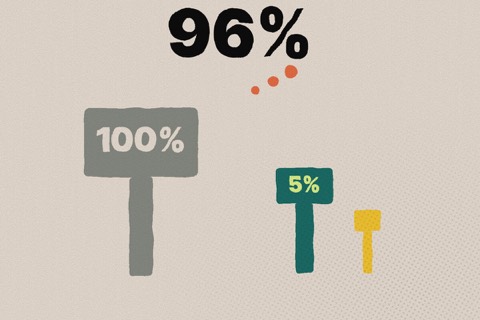
The headline claim is about MAI Code 2. Microsoft says it delivers 96% of Claude Opus 5.5’s performance on common enterprise coding tasks for 5% of the cost, and 98% of GPT-6.1 Sol’s performance at 40% of the price. Those figures average four evaluations focused on practical software development, such as fixing code and completing multi-file changes. Microsoft ran three of the tests on its own evaluation platform and used outside results for the fourth, and it calculated MAI Code 2’s costs using a 50% promotional discount. A lighter model, Code 2 Flash, targets routine fixes and quick edits, with performance Microsoft says is comparable to Claude Haiku 5.5 at 20% of the price. Both coding models are already in GitHub Copilot.
Security is the second target. Microsoft says MAI Cyber 2 Flash succeeded on 92.3% of the vulnerability-discovery tasks in CyberGym-E2E, against 91.5% for GPT-6 Astra, at less than 2% of the cost per task. Microsoft excluded 92 of the benchmark’s 905 tasks after finding overlap between their source material and its training data, and it has not yet published a direct comparison with OpenAI’s restricted GPT-6 Cyber model. The security system will begin replacing an older MAI model for eligible MDASH customers in mid-December.
The logic is not new. Decrypt explains that a model tuned for coding or cyber defense can spend more of its training and compute on the patterns that matter for that job, which can make it faster and cheaper when the task is well defined and repeated thousands of times a day. That does not make small models universally smarter, and the article notes that OpenAI has taken a related approach with its Mini and Nano models.
It also matters strategically. GitHub Copilot has relied heavily on outside suppliers, and putting Microsoft’s in-house models in it reduces that dependence. At the same Ignite event, The Verge reports, chief executive Satya Nadella spent a roundtable talking about how fast AI could change the economy and politics, which gives the product announcements a larger frame.
How should readers treat the numbers? As claims to test. They are vendor-run or vendor-selected benchmarks, the cost comparison depends on a temporary discount, and “96% of the performance” on four tasks is not the same as 96% on your codebase. The useful signal is the direction: the price of good-enough AI work keeps falling, and the big labs now compete with their own customers’ in-house models.
Facts only, never financial advice.